
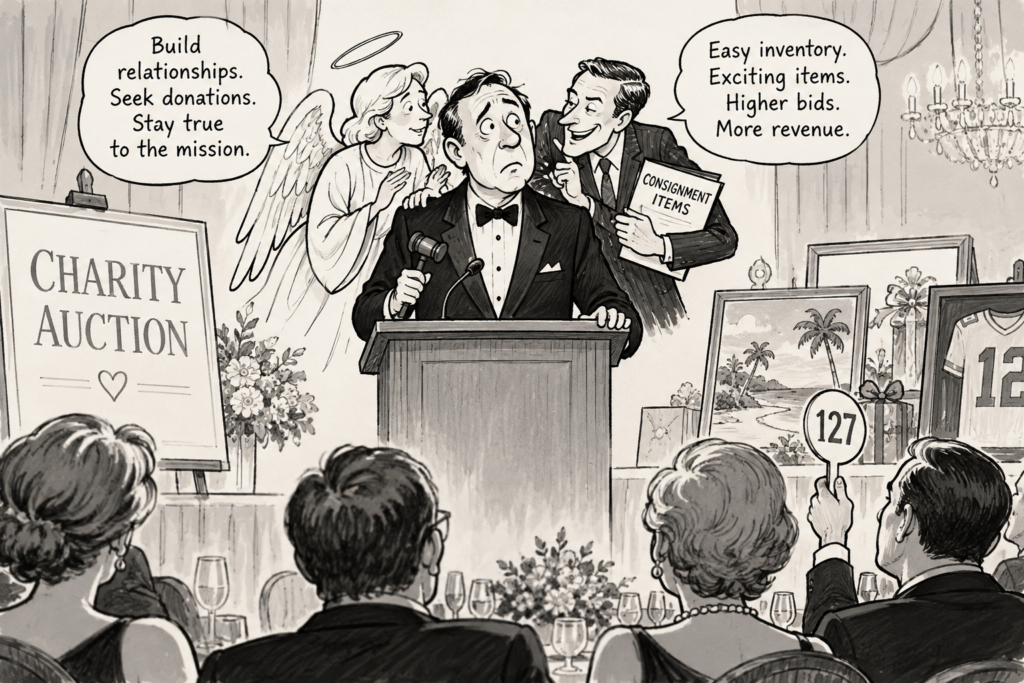
I’m having trouble making up my mind about consignment items at charitable auctions. Normally, I write these weekly blog posts about something I know or already have strong opinions about. Today, I’m stuck in the queasy situation of seeing multiple sides of an issue. I’m hoping someone can make an argument persuasive enough to get me off the fence.
I recently looked at the auction catalog of an organization I know and like. A striking number of items looked like blah consignment merchandise: autographed sports photos, signed equipment, and other items familiar from the emails that consignment companies used to send me when I worked in development. There were no donors identified, and many of the minimum bids were unusually high. I don’t know whether these items actually were on consignment, but the catalog got me thinking. (The organization also listed many of the items’ values as “priceless”, which is another mistake that I don’t have any trouble identifying.)
Now I’m volunteering with another organization that plans to use a consignment company to supplement its auction. This auction will be quite different from the first one. Most of its items will be donated, but the organizers are considering adding a travel package or two on consignment. I’m going to propose that we identify those packages as consignment items and disclose what the organization will actually receive from their sale. Something like: “This item is provided on consignment. The organization will pay the provider $XXXX from the winning bid and retain the balance. The estimated fair market value of the item is $YYYY.”
What’s my issue?

Actually, I have several issues, both ethical and practical.
I wonder whether consignments might deflate the incentive to donate auction items. Somebody who gives a nice gift might reasonably feel a little foolish if the big items getting all the attention were supplied by companies making money on the transaction.
There is also a cost that doesn’t appear in the auction’s financial results. Soliciting donations builds relationships. A business that contributes merchandise may develop an ongoing connection to the organization. The solicitation itself can introduce new supporters to the mission. A well-thanked business donor might evolve into a great source for future gifts, sponsorships and volunteers. Trust me, it happens.
Buying items from a commercial supplier won’t be likely to produce those benefits. Having spent years in development, though, I certainly understand the temptation of opening a catalog instead of making another round of solicitation calls.
Another practical issue is that they might siphon money away from other giving. Personally, I set a budget when I go to charity events, especially if I am someone’s guest. My goal is to make sure that I support the cause at a certain level. If I buy a signed helmet thinking my $800 is going to the cause, I’m going to feel good about myself, even though the charity might receive only $200. Personally, I’d rather make a $300 contribution through a fund-a-need appeal and know where my money is going. Of course, not every bidder thinks the way I do. Some people might happily spend $800 on a helmet but never consider making an outright $300 donation. Perhaps consignment items bring money into the room that wouldn’t otherwise be there. I’d be interested in knowing whether anyone has studied this.
There’s also the possibility that the winning bidder won’t receive quite what they expected. With consignment travel packages, the nonprofit is relying on a third party to deliver the experience. If there are unexpected restrictions, unavailable dates, or other problems, the charity may find itself trying to resolve complaints about an experience it doesn’t control. The bidder might never remember the name of the company providing the trip, but they’ll certainly remember the organization that sold it to them.
Finally, and most importantly, I think there is a real ethical problem of transparency if the consignment is kept concealed. I believe that most people trust that their auction bids are going to a good cause. Encouraging people to bid like crazy to support your cause might get you a few bucks, but the money isn’t all going to the cause. Somebody thinks they’re being a high-roller making a substantial contribution, and it turns out that their winning bid has barely cleared the break-even point.I have had people tell me that bidders are sophisticated enough to know that big items are not always donations, but I’m not so sure.
Of course, I understand that money raised at a charity auction isn’t pure profit. There are expenses involved in putting on the event, and I believe that donors are aware of that. (Though they might be surprised by how much. That’s a discussion for another day.) That said, I suspect that many bidders have no idea that some auction items are purchased from commercial suppliers. They assume the merchandise was donated. That seems to me to create a different obligation to explain where the money is going.
At the moment, I am leaning toward believing that consignment items should be identified. I’m inclined to go further and disclose the cost to the organization, so bidders can tell how much of their money will actually support the cause. But perhaps that’s expecting too much. I don’t know.
Here’s where I’m stuck. I can see how a well-chosen consignment item might bring excitement and additional revenue to a charitable auction. I can also see how an auction full of merchandise supplied by commercial vendors could become something quite different from what bidders think they’re supporting.
What do you think? Should consignment items be identified as such? Should bidders know how much of their purchase price the charity will actually receive? Is there a point at which an auction has too many consignment items?
I haven’t quite made up my mind. I’d be interested in hearing from people who have.