
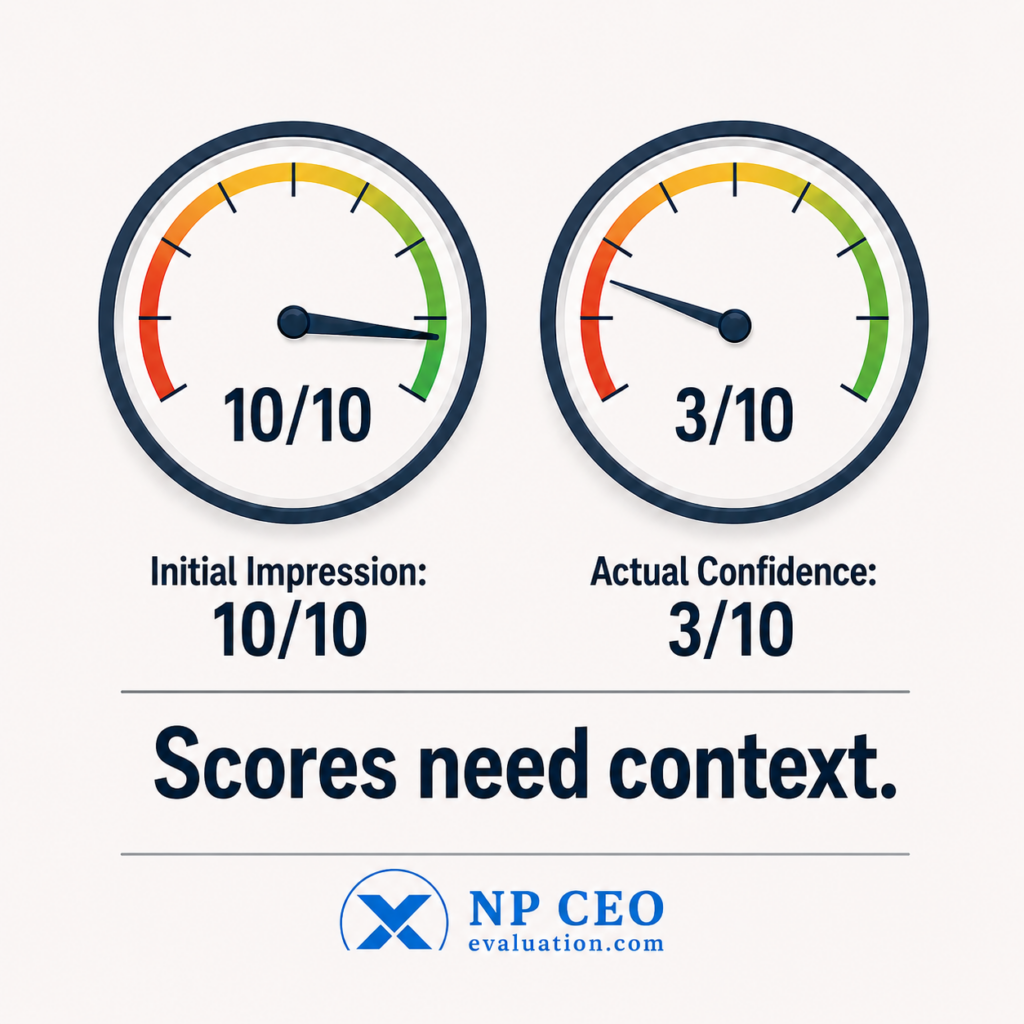
Let me start with a confession. I recently joined a nonprofit board, and I know hardly anything about the history, current pressure points, contractual details or the CEO’s performance over time. I’ve had a bit of orientation, and one board meeting with people I respect as my fellow board members, but I am just catching on. If I had to do an evaluation of the CEO, my feedback would be positive, but not well-informed.
This is one of those problems that polite, responsible people may not want to admit, because nobody joins a board hoping to be the person who says, “I’m sorry, but I don’t actually know enough yet to have a useful opinion about several of these important questions.”
The new board member (like me) may have attended one or two meetings. They probably have met the CEO, looked through the board packet, nodded thoughtfully during the finance report, joined a committee, and heard several other board members say admiring things about the organization. Everything seems fine. The CEO seems capable, the staff seems committed, the mission is worthy, nobody is waving a red flag, and the meeting ended on time. What more can you ask for?
So when the CEO evaluation form arrives, the new board member can be placed in an awkward spot, because they do not want to seem uninformed, they do not want to sound negative, they do not want to create a problem where there may not be one, and they certainly do not want to be the difficult new person who comes in after one meeting and starts grading people as though they have conducted a forensic investigation.
And so, with the best of intentions, they may start giving high scores. Maybe the CEO gets a 9 or a 10 on financial leadership because nobody has said the finances are a problem. Maybe the CEO gets a 10 on human relations because the staff members who appeared at the board meeting seemed pleasant and prepared. Maybe the CEO gets a 10 on community relationships because the organization appears to have a good reputation, at least as far as the new board member knows.
That is understandable. It may even be mostly right. The CEO may be doing an excellent job, the staff may be well-led, the finances may be sound, and the organization may be healthy, effective, and moving in exactly the right direction. But “everything seems fine and I have not heard otherwise” is not quite the same thing as meaningful evaluation.
That distinction matters, because new board members should not have to choose between silence and false certainty. They should not have to pretend to know more than they know, and they should not feel pressured to give glowing scores simply because they have not yet discovered a reason to do otherwise. They also should not fear that admitting limited knowledge makes them look stupid, disengaged, disloyal, or unhelpful. A board member who can say, “My impression is positive, but my confidence in this rating is limited,” is taking governance seriously. That person is recognizing the difference between liking the people in the room and understanding how the organization is actually performing.
That is why I believe CEO evaluations should give board members a way to qualify their ratings. A person can offer a score based on what they know, while also acknowledging how confident they are in that score. That simple extra step can make the evaluation more honest, more useful, and more fair.
Take financial leadership as an example. A new board member may see a clean-looking financial report, hear a calm presentation from the finance committee, and have no reason to believe there is a problem. Giving the CEO a high score may feel reasonable, but if that same board member does not really understand the revenue model, cash flow risks, audit process, restricted funds, reserves, or the financial pressures facing the organization, the board and CEO should know that the high score is based on limited information.
That does not make the score worthless. It gives the score context. It says, in effect, “Based on what I have seen, I am encouraged, but I am still learning enough to know how much I do not know.” My score simply should not be taken as seriously as one from the 3 year chair of the Finance Committee.
That kind of humility can help the CEO, too. If several board members give high marks but low confidence in an area, the message may not be that the CEO is performing poorly. The message may be that the board needs better education, clearer dashboards, stronger committee reports, or more intentional briefing about an important part of the organization’s work.
This is especially important on boards with normal turnover, because even healthy boards are always absorbing new members who arrive with good intentions but limited institutional knowledge. They may bring fresh eyes, professional expertise, community perspective, and genuine commitment, but they do not yet know the organization’s history, hidden risks, internal culture, or operating realities. A good evaluation process should make room for that reality instead of pretending every board member is standing in the same place.
A CEO evaluation should not reward people for pretending to know things. It should create room for honest judgment, including the very responsible judgment that says, “I am still learning.” That is not a dodge, and it is much better than a failure to participate. Sometimes the most responsible answer is not just an optimistic 10. Sometimes it is: “Based on what I know so far, things seem strong — but my confidence in this rating is limited.”
That is not weakness or criticism. Instead, it is helpful information, refreshing candor, and excellent governance, and the evaluation form should make that option available.